The “Cash Flow from Operating Activities” section directly provides the Operating Cash Flow figure. The “Cash Flow from Investing Activities” section details cash spent on acquiring or received from selling long-term assets, which helps in calculating Capital Expenditures. So they found a buyer who is interested in this but he first wants to know check the company’s value is good or not by calculating cash flow from assets.
Can cash flow from assets be negative?
- By calculating cash flow from assets, companies and investors can gain valuable insights into the operational success and financial strategies that drive real value generation.
- Cash flow is the total amount of money being transferred into and out of a business.
- Finally, there’s the financing activities lens, which is akin to managing the financial health of your lemonade stand.
- This ratio helps investors and analysts assess the efficiency and profitability of a company’s asset utilization.
- There can be additional non-cash items and additional changes in current assets or current liabilities that are not listed above.
For example, if you notice a negative trend in cash flow from assets, you might explore ways to cut costs or increase revenue streams. It’s important to note that the cash flow to assets ratio should not be analyzed in isolation. It should be considered alongside other financial ratios and factors to gain a comprehensive understanding of a company’s financial health.

Interpreting Cash Flow to Assets Ratio
- Knowing how to calculate free cash flow and analyze it will help business owners manage their cumulative cash flow more effectively.
- Importantly, understanding the importance of cash flow analysis empowers individuals with freedom in managing their resources effectively.
- It’s a key figure for understanding a company’s financial health, particularly its ability to generate cash independently of external financing.
- Investing activities include purchases of speculative assets, investments in securities, or sales of securities or assets.
- Remember, the Cash Flow to Assets Ratio provides valuable insights into a company’s financial performance and asset efficiency.
- Investors also use the cash flows to total asset ratio to estimate the quality of a company’s earnings.
Ratios help analysts compare and contrast data points, such as return on assets (ROA) and cash ROA. When these two ratios diverge, it is a sign that cash flow and net income are not aligned, which is a point of concern. Let’s consider two companies, Company A and Company B, both operating in the same industry. Company A has a cash flow to assets ratio of 0.15, while Company B has a ratio of 0.08. This means that Company A generates $0.15 of cash cash flow assets formula flow for every dollar of assets, while Company B generates $0.08. The cash flow to total asset ratio is most often used by company management to estimate when cash will be available and how much cash will be available for future operations.
ROA vs. Cash ROA
Using the short-form version of the operating cash flow formula, we can clearly see the three basic elements in every OCF calculation. By considering these factors and incorporating diverse perspectives, we can gain a comprehensive understanding of the nuances surrounding the cash flow to assets ratio. By following these steps and analyzing the results, you can gain insight into how your business is utilizing its financial resources for long-term growth. This understanding will enable you to make informed financial decisions moving forward without losing sight of evaluating potential returns on investment opportunities. The net income as shown on the income statement – i.e. the accrual-based “bottom line” – can therefore be a misleading depiction of what is actually occurring to the company’s cash and profitability.
Cash Flow from Assets Example

Net income relies on accrual accounting rules, which can be manipulated by companies. Discounted Cash Flow, or DCF models, are based on the premise that investors are entitled to a company’s free cash flows. DCF models value companies based on the timing and the amount of those cash flows. Compared to net income or other accrual accounting-based measures, free cash flow is more appropriate https://smartsolar.vn/the-essential-guide-to-accounting-posting/ for showing a company’s potential to produce cash.
BAR CPA Practice Questions: Preparing the Statement of Activities
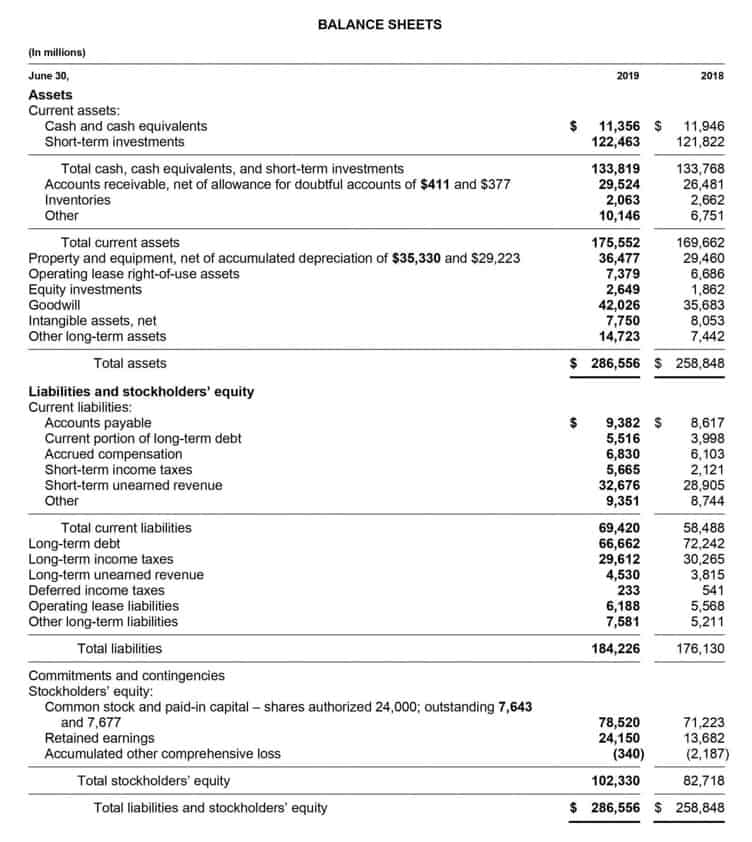
It’s required to know CFFA because Outsource Invoicing it shows profitability and value of the company, that’s why investors and analysts use this matrix. DCF analysis helps you determine if an investment is worthwhile by comparing the present value of future benefits to the initial cost. Weak or negative FCF might indicate heavy investment periods or operational challenges. Packaging these solutions with fixed-fee implementation sprints plus a monthly monitoring retainer creates predictable revenue for the advisor and continuous cash-focused value for the client. Sometimes, even a slight increase in pricing, if justified by value addition, can boost cash flow without affecting demand significantly.